
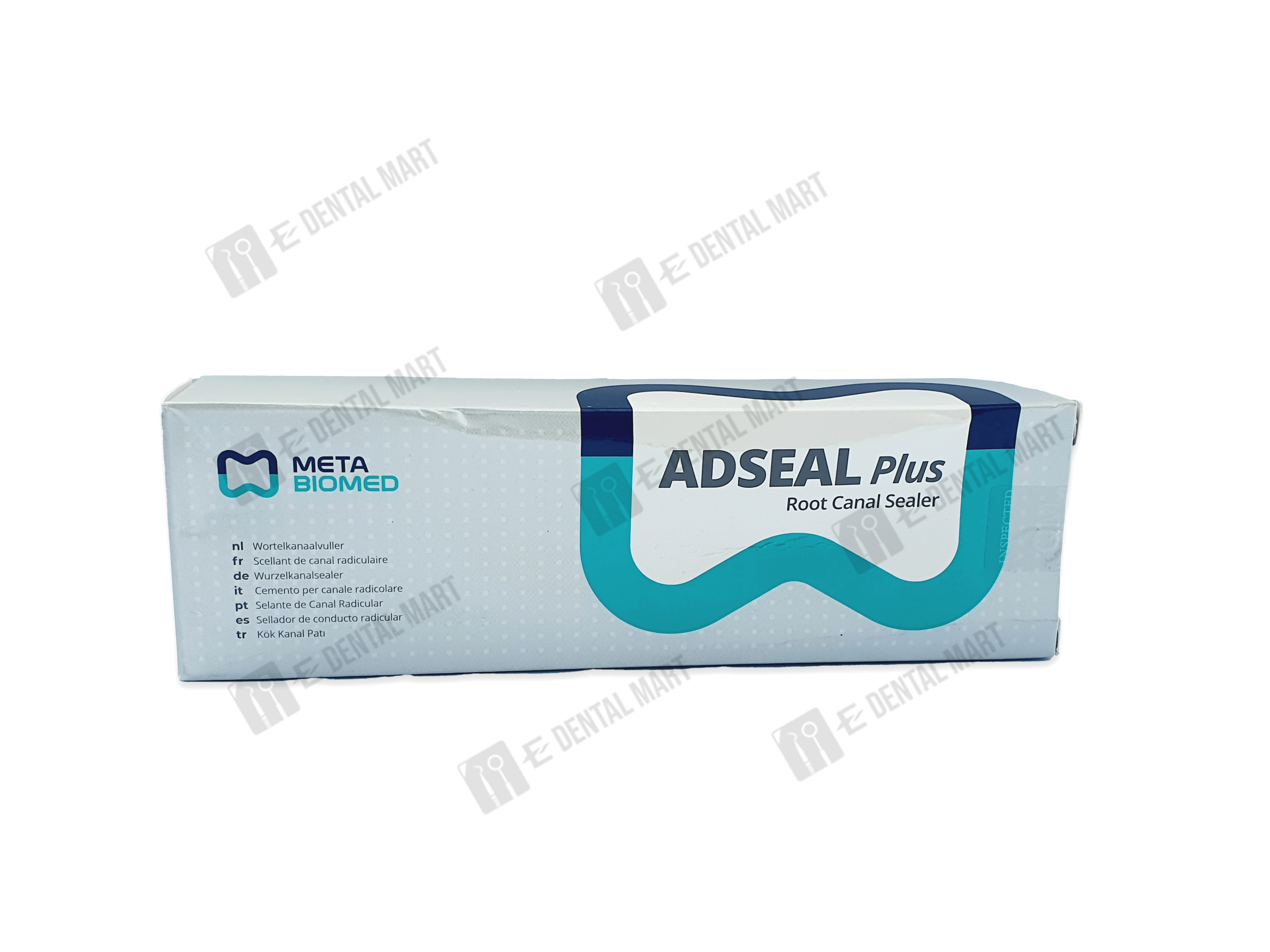
Description
RCT canal sealer plays a critical role in root canal treatment by sealing the space between the canal walls and obturating material. It supports long-term success by limiting microleakage and filling anatomical irregularities within the root canal system.
ADSEAL is a resin-based endodontic sealer designed to provide consistent sealing performance with excellent biocompatibility. Dentists use it during obturation to achieve a stable and radiographically verifiable seal in routine and advanced endodontic cases.
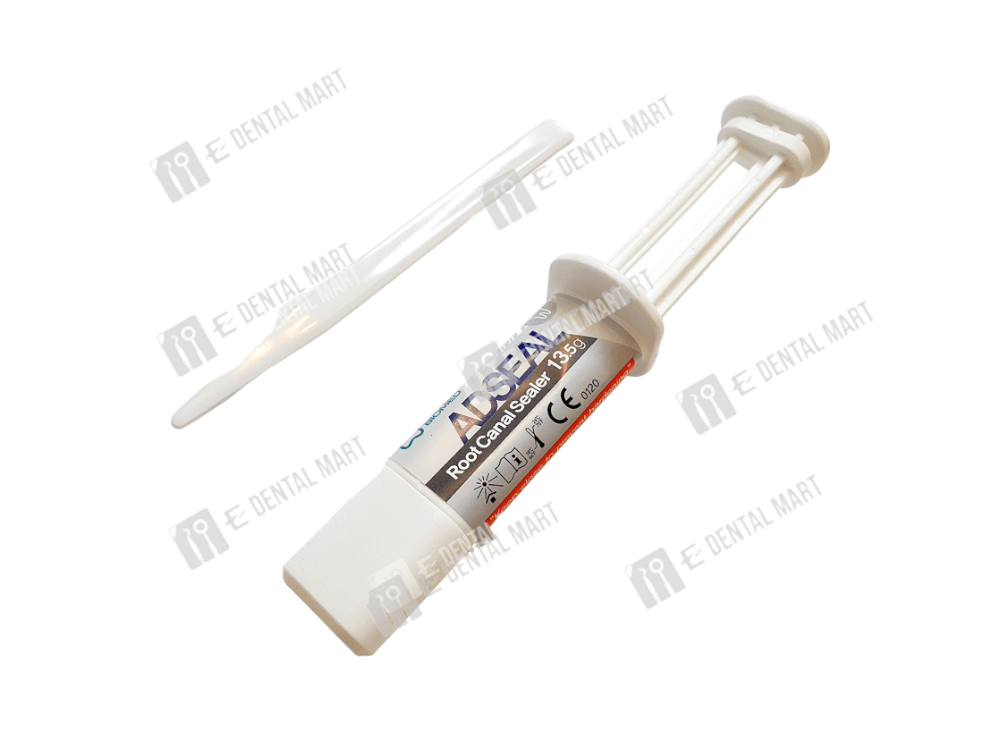
Key Features RCT Canal Sealer Adseal Plus
-
Resin-based formulation for stable sealing
-
Radiopaque for clear visibility on X-rays
-
Hermetic sealing ability
-
Easy mixing and controlled placement
-
Long working time for clinical flexibility
-
Dimensional stability after setting
-
Non-staining formulation
-
Supplied in syringe system with base and catalyst
Clinical Benefits of RCT Canal Sealer
This sealer adapts well to canal walls and obturation materials, which improves sealing integrity. As a result, it helps limit bacterial penetration and supports long-term treatment outcomes.
In addition, its biocompatible composition minimizes irritation to periapical tissues. The slow setting behavior also allows clinicians adequate time to complete obturation without stress.
Applications in Endodontic Treatment
Dentists commonly use this material for:
-
Sealing root canals during obturation
-
Filling gaps between gutta-percha and canal walls
-
Managing lateral and accessory canals
-
Thermal obturation techniques
-
Routine and complex endodontic cases
Application methods include syringe delivery, hand mixing, and controlled placement as required.
Handling and Usage Guidelines
Mix the base and catalyst according to manufacturer instructions. Apply the material evenly within the prepared canal before obturation. Confirm sealing quality radiographically. If retreatment becomes necessary, clinicians can remove the material using standard endodontic techniques.





Reviews
There are no reviews yet.