

Description
Glass Ionomer Cement is a clinically established dental material used for cementation and restorative procedures. It chemically bonds to enamel and dentin without requiring an additional bonding agent, which simplifies clinical workflow and improves marginal integrity.
SND Glass Ionomer Cement is available in Type 1 (luting) and Type 2 (restorative) forms. Its powder–liquid system allows controlled mixing, smooth handling, and predictable setting behavior, making it suitable for routine use in general and restorative dentistry.
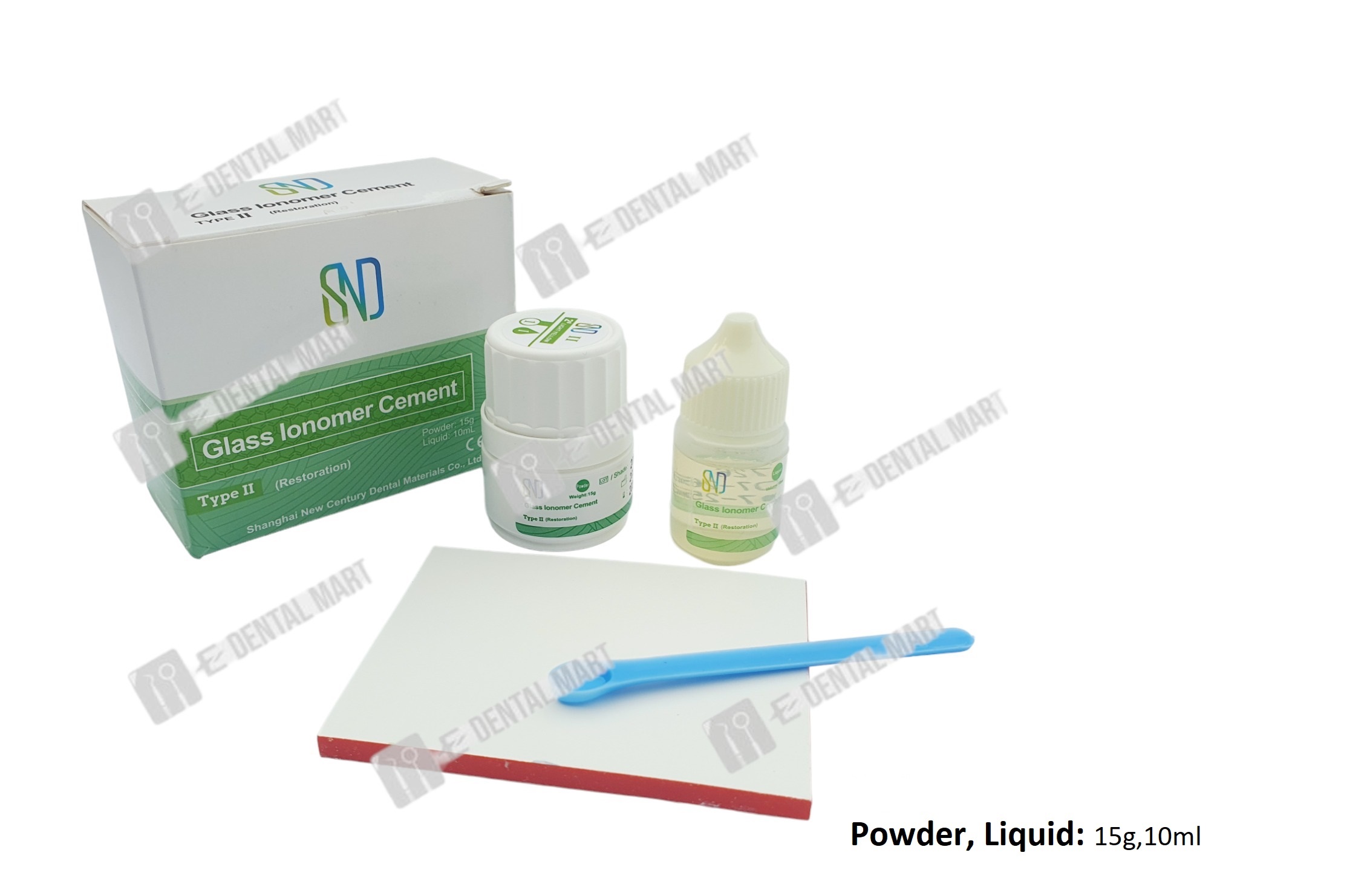
Available Types and Clinical Use
Type 1 – Luting Cement
Dentists use this variant for permanent cementation procedures where thin film thickness and reliable adhesion are essential.
Common uses include:
-
Cementation of crowns and bridges
-
Placement of inlays and onlays
-
Fixation of orthodontic bands
-
Long-term prosthetic seating
This type offers high fluidity for accurate placement and stable retention.
Type 2 – Restorative Cement
This variant supports direct restorative applications, especially in low-stress areas and preventive dentistry.
Common uses include:
-
Class III and Class V restorations
-
Cervical erosion and root surface fillings
-
Temporary restorations
-
Base or liner under composite restorations
-
Restorations in primary teeth
Key Features of Glass Ionomer Cement
-
Chemical adhesion to enamel and dentin
-
Fluoride release for caries prevention
-
Radiopaque formulation for X-ray visibility
-
Low solubility and reduced microleakage
-
Smooth mixing and easy placement
-
Controlled working and setting time
-
High biocompatibility with tooth structure
Clinical Benefits of Glass Ionomer Cement
This material supports long-term restoration stability by forming a chemical bond with tooth structure. As a result, it reduces marginal gaps and helps maintain a caries-resistant environment.
In addition, fluoride release contributes to secondary caries prevention, especially in high-risk patients. The ease of manipulation also improves efficiency during routine procedures without compromising clinical outcomes.
Indications in Daily Practice
Dentists commonly select this cement for:
-
Permanent luting of indirect restorations
-
Non-load-bearing restorations
-
Cervical and root surface lesions
-
Pediatric restorative cases
-
Preventive and interim treatments
It fits well into clinics that require a versatile material for multiple treatment scenarios.
Usage Guidelines
Follow manufacturer-recommended powder-to-liquid ratios to achieve optimal consistency. Mix thoroughly on a clean surface and place promptly within the working time. Protect the material from moisture contamination during the initial setting phase to ensure proper adhesion and strength.








Reviews
There are no reviews yet.