

Description
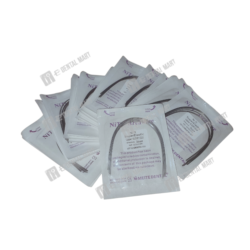
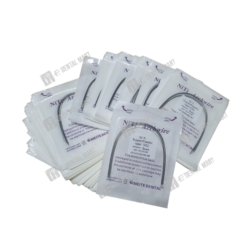
Orthodontic reverse curve wire made from nickel-titanium (NiTi) is designed to correct vertical discrepancies and arch leveling issues during orthodontic treatment. Its pre-formed reverse curve helps clinicians manage deep bite and open bite cases effectively while maintaining controlled and continuous force delivery.
Thanks to its superelastic behavior and rectangular profile, it provides improved torque expression, vertical control, and predictable tooth movement during early to mid-treatment stages.
Primary Clinical Applications
Deep Bite Correction
Orthodontic reverse curve wire intrudes anterior teeth and extrudes posterior teeth, which helps flatten the exaggerated curve of Spee. Consequently, it reduces excessive overbite in a controlled manner.
Open Bite Management
When clinicians invert the wire, it supports extrusion of anterior teeth and intrusion of posterior teeth. This approach assists in closing anterior open bites efficiently.
Arch Leveling
The reverse curve geometry helps level the occlusal plane, especially in lower arches where the curve of Spee appears more pronounced.
Torque and Vertical Control
The rectangular cross-section engages bracket slots more fully, allowing better torque expression and vertical tooth control compared to round wires.
Anchorage Assistance
The wire’s design redistributes forces across the arch, which can reduce the need for additional anchorage methods in selected cases.
Use with Elastics and Auxiliaries
Clinicians often pair it with Class II or Class III elastics, bite turbos, or other auxiliaries depending on the malocclusion.
Design & Material Features
Reverse Curve of Spee Geometry
The negative curve counteracts the natural curve of Spee, supporting vertical correction and occlusal leveling.
Nickel-Titanium Shape Memory
NiTi alloy restores the wire to its original shape after deflection, delivering light and continuous forces throughout treatment.
Rectangular Cross-Section
The rectangular profile allows three-dimensional control, including torque, rotation, and vertical movement.
Low Load-Deflection Rate
Gentle and consistent force application improves biological response and patient comfort.
Corrosion Resistance
NiTi material resists oral corrosion, ensuring durability over extended treatment periods.
Upper and Lower Arch Compatibility
Manufacturers design this wire for both maxillary and mandibular arches, depending on treatment goals.
Key Benefits of Orthodontic Reverse Curve Wire
-
Supports efficient deep bite correction
-
Assists in open bite treatment when inverted
-
Flattens the curve of Spee effectively
-
Provides light, continuous forces for comfort
-
Enhances torque, rotation, and vertical control
-
Helps speed up early leveling and bite correction
-
Offers long-term durability in the oral environment
Why Choose Orthodontic Reverse Curve Wire?
Orthodontists select orthodontic reverse curve wire when vertical control and arch leveling play a critical role in treatment success. It delivers predictable biomechanics while maintaining patient comfort, making it a reliable choice for managing complex bite problems.
Frequently Asked Questions
A: Orthodontists use reverse-curve archwires during early to mid-treatment stages to correct vertical discrepancies and level the bite.
A: The reverse curve intrudes anterior teeth and extrudes posterior teeth, which helps reduce excessive overbite effectively.
A: Yes, clinicians invert the wire to extrude anterior teeth and intrude posterior teeth when managing open bite cases.
A: Rectangular designs engage bracket slots more fully, which improves torque expression and vertical tooth control.
A: Yes, it delivers light and continuous forces that move teeth efficiently while reducing discomfort.







Reviews
There are no reviews yet.